
Imagine you open Sephora’s website to buy one lipstick. Just one. Five minutes later, you’re looking at a serum, a mascara, and a foundation shade that feels strangely perfect for you. Why am I seeing this product?
Today’s question: how do beauty brands use web analytics to personalize your online shopping experience? It’s not magic. It’s a pipeline.
It starts with tracking. Tools like Google Analytics record user behavior as events: page views, clicks, searches, add-to-carts, and purchases (Google, n.d.). This is behavioral data, and it matters because it shows what people actually do, not just what they say. That is a central idea in web analytics (Kaushik, 2010).
In beauty, that behavior is rich. Shoppers compare shades, read ingredient lists, and come back to the same moisturizer several times. Each of those actions is a signal.
But a shopper’s behavior is scattered across a laptop, a phone, emails, and stores. A Customer Data Platform, or CDP, is software that combines these sources into one persistent customer profile (CDP Institute, n.d.).
Sephora’s loyalty program, Beauty Insider, is a natural example. It has three tiers, Insider, VIB, and Rouge (Ecommerce Fastlane, 2023), and because members log in, a brand can link browsing to purchase history and to the preferences members choose to share. I’m describing how this kind of linkage works in general. Sephora hasn’t published the details of its own systems.
With unified data, brands create segments. Some are broad, like “skincare lovers.” Some are specific, like “bought a vitamin C serum two months ago and hasn’t returned.” Segments let the brand show different experiences to new visitors, loyal customers, and people who abandoned a cart.
Now the part you see. The classic research describes three approaches (Adomavicius & Tuzhilin, 2005). Content-based systems recommend items similar to ones you liked, such as the same ingredients or shade family. Collaborativesystems recommend what similar users liked. Hybrid systems combine both.
Why does it matter commercially? Netflix’s own researchers describe its recommender system as a major source of business value (Gomez-Uribe & Hunt, 2016). Beauty retailers face a similar challenge: huge catalogs and shoppers who need help narrowing down.
This is what makes the topic web analytics: measurement. Brands track metrics like conversion rate, click-through rate on recommendation blocks, average order value, and cart abandonment (Kaushik, 2010). And the standard way to test whether personalization causes an improvement is the A/B test, or controlled experiment: one group sees personalization, a control group doesn’t, and the difference in results shows its effect (Kohavi et al., 2020).
So analytics doesn’t just power personalization. It audits it.
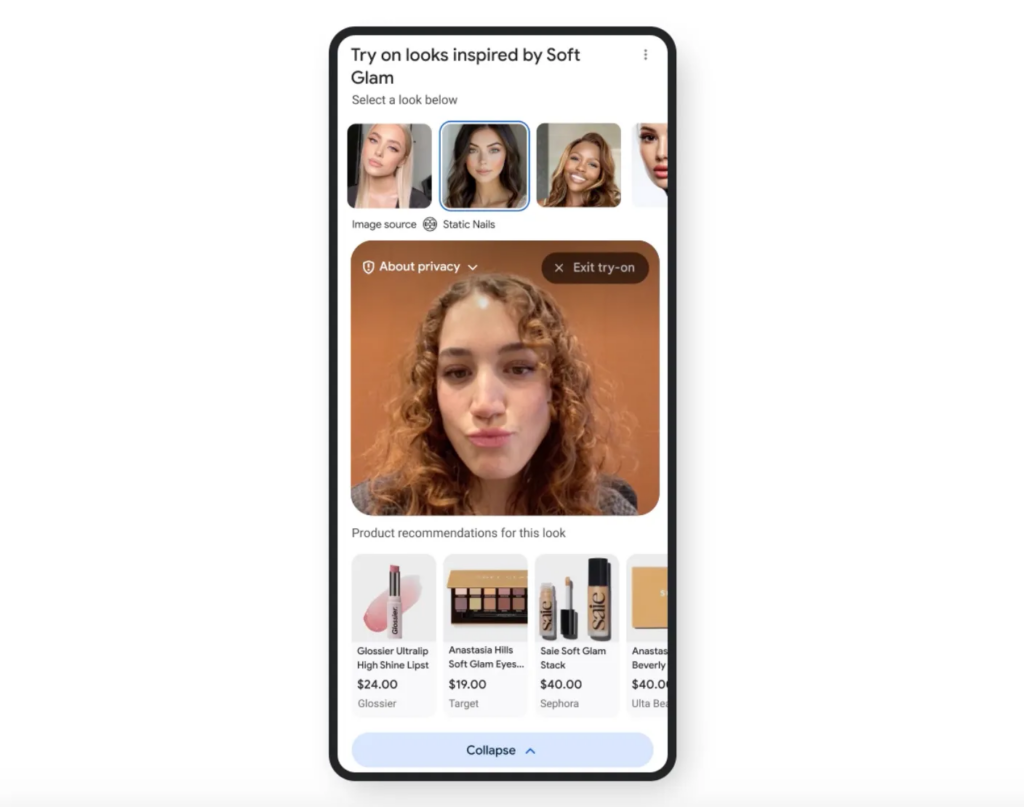
Let’s make this concrete with a hypothetical example. Say a shopper searches for “vitamin C serum,” reads two ingredient lists, and leaves without buying. On the brand’s side, those actions are recorded as events. If she’s logged in, the CDP connects them to her past purchases. Segmentation might place her in a group like “interested in brightening, hasn’t converted.” A few days later, a recommendation block might show her similar serums, or an email might remind her of the one she viewed most. None of this requires anyone at the brand to look at her individually. It’s a chain of small automated decisions, and each link in that chain can be measured. That is why the same shopper can see a different homepage than her friend, even when they visit at the same moment.
Let’s be critical. First, the filter bubble. Pariser (2011) argues that personalization can narrow what people are exposed to. Fleder and Hosanagar (2009) showed that, under some conditions, recommender systems can reduce the diversity of sales by concentrating attention on popular items.
There is also a fairness risk. Buolamwini and Gebru (2018) found that commercial facial analysis systems performed worse for some groups, including darker-skinned women. That study isn’t about beauty recommendations, but it illustrates a general lesson: if some skin tones or hair types are underrepresented in the data, a system may serve those shoppers less well.
And privacy. In Quebec, Law 25 amended privacy legislation to strengthen requirements around how organizations handle personal information (Act to modernize legislative provisions as regards the protection of personal information, 2021). Personalization works best when shoppers understand and accept how their data is used.
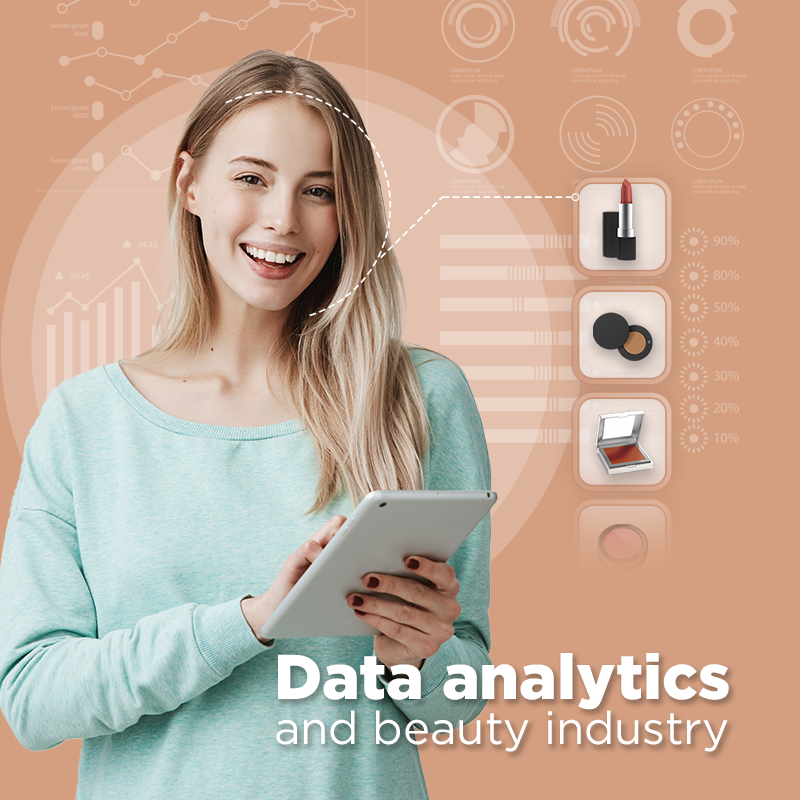
So, why am I seeing this product? Because analytics collected your behavior, a CDP unified it, segmentation organized it, a recommendation engine acted on it, and conversion metrics checked whether it worked. The goal should be personalization that is useful, measurable, and transparent. Thanks for listening.
References (APA 7)
Act to modernize legislative provisions as regards the protection of personal information, S.Q. 2021, c. 25 (Quebec).
Adomavicius, G., & Tuzhilin, A. (2005). Toward the next generation of recommender systems: A survey of the state-of-the-art and possible extensions. IEEE Transactions on Knowledge and Data Engineering, 17(6), 734-749.
Buolamwini, J., & Gebru, T. (2018). Gender shades: Intersectional accuracy disparities in commercial gender classification. Proceedings of Machine Learning Research, 81, 77-91.
CDP Institute. (n.d.). What is a CDP? [Add exact URL]
Ecommerce Fastlane. (2023, April 25). Rewards case study: Sephora’s Beauty Insider.https://ecommercefastlane.com/rewards-case-study-sephoras-beauty-insider/
Fleder, D., & Hosanagar, K. (2009). Blockbuster culture’s next rise or fall: The impact of recommender systems on sales diversity. Management Science, 55(5), 697-712.
Gomez-Uribe, C. A., & Hunt, N. (2016). The Netflix recommender system: Algorithms, business value, and innovation. ACM Transactions on Management Information Systems, 6(4), Article 13.
Google. (n.d.). About events. Google Analytics Help. [Add exact URL]
Kaushik, A. (2010). Web analytics 2.0: The art of online accountability and science of customer centricity. Sybex.
Kohavi, R., Tang, D., & Xu, Y. (2020). Trustworthy online controlled experiments: A practical guide to A/B testing.Cambridge University Press.
Pariser, E. (2011). The filter bubble: What the Internet is hiding from you. Penguin Press.