
The way that TikTok and Instagram algorithms affect Gen Z, product discovery, and digital marketing choices.
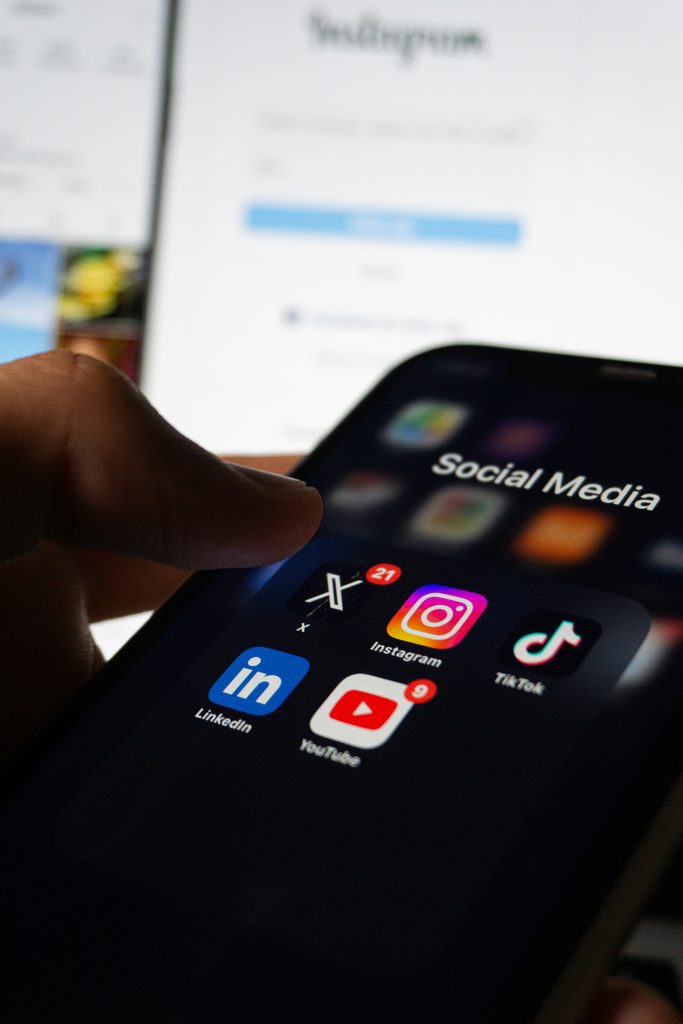
Have you ever opened TikTok and after just five minutes realized that half an hour has gone by? Or watched a single video on a holiday destination and then discovered that your feed is full of travel suggestions? This is no accident. The videos you see are the result of recommendation systems which aim to predict what you might be interested in next.
TikTok and Instagram have altered the way that Gen Z finds out information, interacts with brands, and assesses products. Rather than showing all users the same content, these platforms base their personalised recommendations in part on online behaviour. So how do the TikTok and Instagram algorithms decide what Gen Z sees and what does this mean for digital marketers?
What are social media algorithms and how do they work?
A social media algorithm is a system that chooses and ranks content by using signals which may suggest relevance. A recommendation system predicts the posts or videos that a person may find useful or entertaining. It does not merely display all available posts in chronological order.
Typical ranking signals include:
- Interactions: likes, comments, shares, saves, follows and negative feedback.
- Viewing behaviour: watch time, completion, rewatches and skips
- Content information: captions, sounds, topics and hashtags.
- User information: language, location and certain account or device settings.
For instance, if a person watches a number of reviews about running shoes, they are then more likely to see fitness videos. The algorithm has worked out a likely interest based on that behaviour. This is what is known as algorithmic personalization: instead of showing everyone the same content, it adjusts the recommendations to suit the individual user. The precise way in which the various signals are weighted is not entirely made public and may vary over time.
TikTok versus Instagram: How Do Their Algorithms Decide What You See?
How does the TikTok For You Page algorithm work?
TikTok states that the content recommended on the For You page is affected by the user’s interactions, details about the content and information about the user. For most users, interaction signals such as the length of time they spend watching are given more weight than the settings on their device. A creator does not have to be as popular as a celebrity in order to be recommended to people who do not follow them.
How does the Instagram algorithm work for Reels, Stories, and Feed posts?
Instagram does not use a single identical ranking system in all cases. Stories place a stronger focus on the accounts and relationships that a user already interacts with, whereas Reels and the Explore page offer the chance to come across content from accounts that the user does not follow. This difference is important for brands when deciding whether they want to focus on discovery, loyalty, or continuous community engagement.
How Do TikTok and Instagram Algorithms Influence Gen Z Buying Decisions?
1. Personalized recommendations lead to product discovery
A Gen Z user could come across a skincare product while watching a video on their routine, even if they had not searched for the brand. Further videos similar to the ones they have already interacted with can then appear. For marketers, this shows how the algorithms are linked to the awareness stage of the customer journey: a brand can get into a consumer’s consideration set before the consumer has even started a deliberate search for a product.
2. Repeated exposure can lead to social proof
Social proof involves taking the behaviour or opinions of other people as a guide when making decisions. If many different creators talk about the same product, it may appear to be popular or worthwhile to look into. Although recommendation systems can increase exposure to related topics, repeated exposure does not mean that the product is of good quality or that it is trustworthy.
3. Discovery does not mean that a purchase will take place
The connection between personalised social media recommendations and Generation Z’s intention to buy can be explained by means of a simple journey:
| Stage | Possible user action | Marketing implication |
| Discovery | Sees a recommended product video | Brand awareness |
| Interest | Watches a demonstration | Attention and relevance |
| Evaluation | Checks reviews, price, alternatives | Credibility and information |
| Purchase | Decides whether to buy | Conversion |
| Sharing | Posts a review or recommendation | Potential new discovery content |
Real Brand Case Study: How Duolingo Uses TikTok to Reach Younger Audiences
Duolingo turned its green owl mascot into a well-known TikTok character. Rather than just running traditional advertisements for language learning, the company used humour, repeated jokes, current trends and interactions with commenters. As a result, its content came across as part of the entertaining nature of the platform. The early growth it achieved on TikTok was mentioned in a Shorty Awards campaign entry.
What did Duolingo do differently?
- Used its mascot as a recurring character instead of keeping it as a fixed brand logo.
- Adapted to current sounds and the kind of humour specific to the platform.
- Created recognisable storylines that gave people a reason to come back.
- Responded to the community and tried out new creative ideas.
The takeaway for brands who want to improve their organic reach on TikTok is not that using memes will ensure success. Duolingo combined a creative identity, experimentation, knowledge of the audience and platform-specific storytelling. The number of likes, comments, shares and views is relevant to the recommendation systems, but the algorithm on its own is not enough to account for the outcome of a campaign.
Which social media performance metrics are most important?
| Metric | What it tells marketers |
| Reach | How many unique accounts encountered the content |
| Impressions | How often the content was displayed |
| Watch time | How long the audiences spent watching |
| Shares and saves | Whether users wanted to pass along or revisit content |
| Conversion rate | Whether people completed a desired action |
Do social media algorithms always provide benefits?
Personalisation can help people to find content that is relevant to them, but it also raises some issues. A filter bubble occurs when personalisation reduces exposure to different viewpoints. It is a potential risk rather than a certain result because recommendation systems can also expose users to new creators and new topics.
Since recommendation systems rely on behavioural data, concerns about privacy and transparency arise. And when the platforms prioritise engagement, marketers have to decide between producing genuinely useful content and using sensational methods that grab attention without benefiting the audience. Responsible approaches should take into account not only performance but also user well-being.
Frequently Asked Questions About Social Media Algorithms (FAQ)
Does TikTok give a preference to accounts with more followers?
Not necessarily. TikTok states that the number of followers is not a direct factor in determining the order of content in the For You page. It is therefore possible for smaller accounts to be found when the system judges their content to be relevant. [1]
Why does my TikTok For You page change so frequently?
The recommendations are altered as the system receives new signals such as videos that have been watched, skipped, liked or shared. A change in user behaviour can cause the content that appears in the feed to change.
Is TikTok or Instagram better for marketing to Gen Z?
Neither platform is inherently better. The decision depends on the audience’s behaviour, the type of creative content, the marketing objectives and how success is measured. TikTok can support discovery based on video, while Instagram provides a range of formats for discovery and for maintaining relationships within existing communities.
Can brands go viral without spending money on ads?
Yes, organic recommendations can reach people outside of an account’s followers. However, viral reach is difficult to predict and does not guarantee conversion or long-term loyalty.
For social media algorithms do hashtags still matter?
Hashtags can be used to describe content and aid in its discovery, but they are only one of a number of signals since relevant content and audience behaviour also play a role.
Conclusion
In conclusion, it is possible to understand algorithms without attempting to deceive them. The algorithms used by TikTok and Instagram affect the kind of content that Gen Z sees, the brands that people come across, and the information they might take into account when making purchasing decisions. However, optimising social media algorithms for brands aiming at Gen Z is not just a matter of following fashion trends or aiming to get the most views. The best strategy is one that blends an understanding of the platforms with content that their audiences actually find useful, enjoyable, or relatable.
References and further readings
Lanman, M. (2026, November 2). A marketer’s guide to how social media algorithms work and how to master them. Sprout Social. https://sproutsocial.com/insights/social-media-algorithms/
TikTok Support. (n.d.). https://support.tiktok.com/en/using-tiktok/exploring-videos/how-tiktok-recommends-content
Hutchinson, A. (2023, May 31). Instagram Shares New Explainer on How its Feed, Reels and Stories Algorithms Work. Social Media Today. https://www.socialmediatoday.com/news/instagram-explainer-feed-reels-and-stories-algorithm/651705/
Duolingo TikTok Channel – The Shorty Awards. (n.d.). https://shortyawards.com/14th/duolingo-tiktok-2
TikTok For Business. (2026, September 23). Duolingo. TikTok for Business. https://ads.tiktok.com/business/en-US/inspiration/ad-awards-duolingo-case-study
Hirose, A. (2026, October 14). Instagram algorithm tips for 2026: Everything you need to know. Social Media Marketing & Management Dashboard. https://blog.hootsuite.com/instagram-algorithm/