
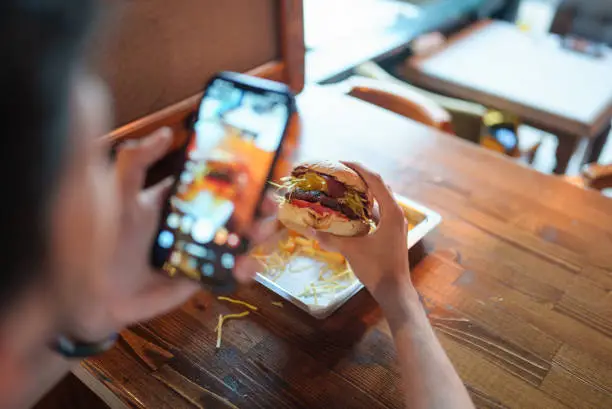
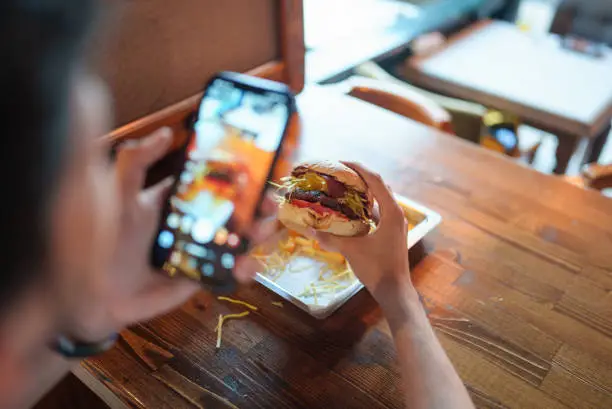
The rise of food influencers
As a result, restaurants are now competing on a different front. Instead of their goal being featured in traditional articles or guides, many restaurants now gain visibility through food influencers who share photos, reviews, and experiences with their followers.
Social media has become an important space for discovering restaurants and food trends. In fact, Deloitte Digital reports that 65% of consumers follow food and lifestyle topics on social media, making it a community online. This highlights how platforms like Instagram through food influencers have become central to restaurant marketing strategies.
Interestingly, a large number of consumers discover restaurants passively through their social media feeds rather than actively searching for them. When a restaurant repeatedly appears in posts from food influencers, it naturally attracts their attention.
Why food influencers are trusted by consumers
In many ways, food influencers have become a modern version of online review platforms, which were mostly anonymous. However, Gen Z often perceives them as more trustworthy because followers feel connected to their personalities and tastes. Seeing a restaurant recommended by multiple food influencers or a food influencer they particularly relate to can therefore strongly influence people’s perception of its quality and popularity.
Instagram vs TikTok

Food influencers playground lay mainly on platforms that prioritise picture and video content meaning mainly instagram and TikTok. However, instagram food influencers and TikTok food influencers or those who post on both platform need to have a different strategy because the expectations when going on one platform or the other is different.
Food influencers who post on instagram have a more professional like content, the pictures they post are aesthetic and nicely edited. The detailed review of the restaurant will most likely be written in the description of the post.
On the other hand, food influencers who post on TikTok have a different way of coming up with their content. The most evident difference is going from pictures to videos which even when edited are supposed to feel more spontaneous, the food influencer will review the restaurant out loud most likely while still being in the restaurant itself, which allow them to appear as more honest.
In most cases, food influencers diversify their content by posting on both platforms if not more and adapt their content. This strategy will allow them to double engagement opportunities and their viral potential.
Conclusion
Overall, the rise of food influencers reflects a shift in the way people consume and take decisions. This situation inevitably changes the way restaurants tackles their marketing strategy moving from traditional methods towards more influencers driven strategies.
Sources:
https://www.forbes.com/sites/deloitte/2025/11/19/rtx-cdo-on-ai-value-beats-volume-every-time
https://www.deloittedigital.com/us/en/insights/perspective/social-media-strategies-restaurants.html
https://www.bbc.com/future/article/20211206-does-seeing-food-on-social-media-make-us-eat-more
written by Yasmine Guentouri