
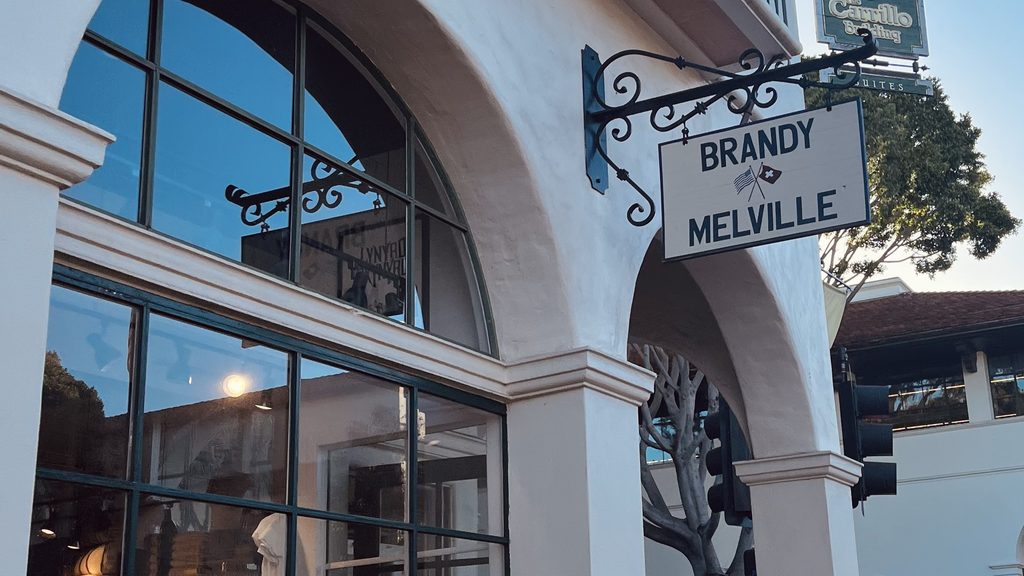
The Brandy Melville paradox
It’s 2009, Brandy Mellvile has just opened a store in Los Angeles, California, just close to UCLA. Teenage girls go crazy, all the clothes are “one size fits most” but have an extra small fit, still somehow they love it.
At first, the brand faces criticism for its limited clothing size, then as the years go by, the list of bad things increases for its business practices, fast fashion approach, excludent marketing and even a CEO exposé, all culminating in a documentary produced by HBO called Brandy Hellville & The Cult of Fast Fashion, released in 2024.
The paradox is how can a brand face that much criticism, go through multiple scandals, and still survive? The answer is simple: a strong brand identity. This article will analyze Brandy Melville marketing strategy that helped surviving critics and scandals.
Brand Identity
The first location in the US being open California was not by accident, the image of the California girl is the core of the brand’s aesthetic. The clothes, the physical store, the marketing, everything is based on the image of the idealized californian girl, white, blonde, skinny, effortlessly cool.
It is an excludent value proposition that creates the wish for belonging. Because not all can achieve it, it makes consumers feel a part of this exclusive group. This is the basis of the symbolical value for brandy, women want to buy it for aspirational reasons, as a result, it’s fundamentally the brand identity.
Inspired by the Californian girl lifestyle, brandy melville sells more than clothes: it sells an aspirational identity.
Going against traditional campaigns for fashion brands, Brandy Mellvile’s advertising photos appear low effort, the photos in their website may seem like taken by amateurs, and that’s because they are. As the HBO document shows, Brandy Mellvile has historically used its employees for advertisement, such that taking pictures of their outfits was part of their work routine. The instructions are to take it with the city in the background, with the employees as models, for this reason they only hire teenage girls that fit into the pattern. The photographs contribute to the casual feel, fits closer to a content produced by common teenagers, but still just a bit out of reach, considering that the casual style was meticulously posed and the models still represent a specific ideal beauty pattern.
14 countries, one experience
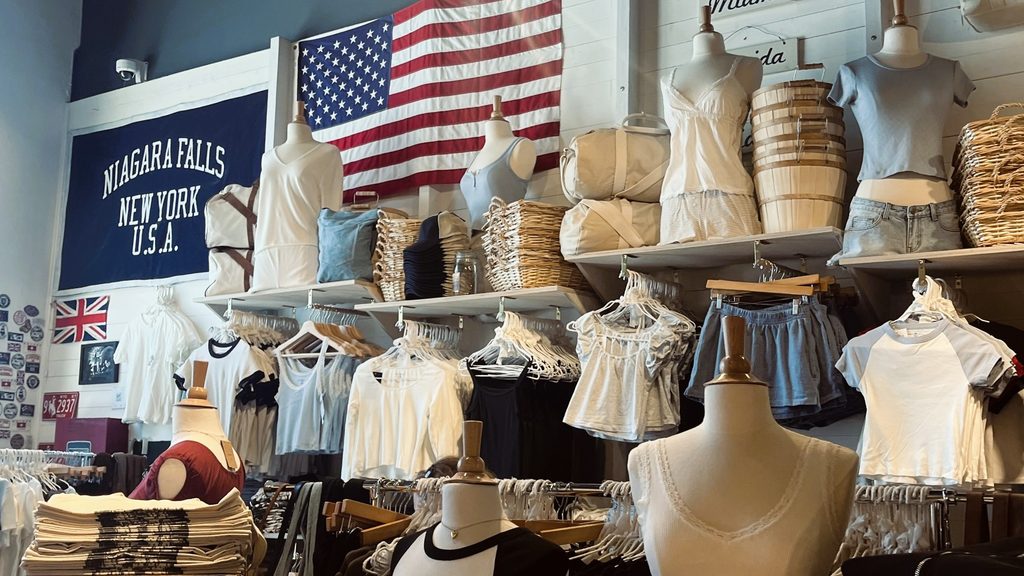
The branding is reinforced throughout the whole shopping experience too. Shopping at Brandy Mellvile’s stores materialize the California feeling no matter where in the world, with more than 113 locations. It does not matter if it is in the US, Canada, Italy or Hong Kong, all stores feel the same.
The walls are covered in american flags and posters, there are fairy lights hanging in the ceiling, alternative american music playing, piles of clothes cramped in tables and US themed stickers handed at the cashier after a sale. That is done on purpose to replicate that value proposition and feeling of belonging just by being in the store. Every detail contributes to make the brand memorable and recognizable.
The store makes a strong impression on the individual. People don’t forget their brandy experience, either for bad or good reasons.
The exclusivity can increase desirability but also contributes to exclusion. Part of the reason why customers have bad experiences at Brandy is precisely because they feel rejected from the imposed pattern. It is not a new source of criticism, it is ongoing since the beginning of the store. People demand social responsibility. But then, why haven’t these critics eliminated the interest for the brand?
UGC and influencers
The branding is replicated in social media by avid consumers. A famous example is in 2019 when the world famous supermodel Bella Hadid wore Brandy Melville’s tops. She was photographed by paparazzi and the pictures were popularized by fans on platforms like TikTok and Pinterest. This helped the brand to fit even more in the casual but exclusive aesthetic. It has become a recognizable brand through this strategy, reinforcing the exclusive and highly desirable feeling of the brand.
Furthermore, the consumers become brand promoters, posting hauls of items on social media, spotting garage sales and even, in an obsessive way, there are multiple accounts on TikTok that show what is new at brandy melville’s stores all around the world on a daily basis.
In this way, Brandy is an interesting marketing case that shows a brand who relies on earned media, that is, celebrities that wear their clothes and UGC, as well as owned media with the photographs of female store employees. This UGC has become so popular that it is one of the pillars that the brand was built on.
| Item | Traditional Fashion | Brandy Melville |
| Models | Professional Models | Store Employees mostly |
| Media | Paid Media | Earned Media and Owned Media |
| Store Experience and items | Adapts to local culture | Predominant American Aesthetic |
| Influencers | Paid influencers and partnerships | Organic influencer content |
Serious crises
The scandals and criticism were not lightly though, it has questioned the image and brand legitimacy. Regarding the company’s leaders, there were scandals about discrimination. An ex store-owner has admitted to receiving orders to fire black employees or considered above the ideal weight. There was a serious investigation on the topic, according to Business Insider’s investigation. There were racist comments, as well as practices that encouraged white employees and discouraged black employees.
Why do people still buy?
Even after critics, the consumers appear to be absorbed in the storytelling of the brand. Furthermore, in the HBO documentary there are allegations on fast fashion practices and involvement. If consumers are not stopped by that, it is because the branding and the products are strong enough that they put their own needs and desires as priority.
It can be a strong indication of cognitive dissonance, when the individual minimizes negative information to make sense of a personal choice that goes against it. In this case, female shoppers that want to buy their products choose to put less weight on the company’s management or ethics.
That seems to be the secret formula for a resilient brand: a strong, aspirational identity with a digital community that has followers around the world and still feels exclusive. The clothes can look plain for the average person, but Brandy lovers can identify them from afar.
FAQ (Frequently Asked Questions)
Is Brandy Melville ethical?
Not quite the most ethical company. It has an HBO documentary on its debatable value proposition, employee scandals and fast fashion practices called “Brandy Hellville & the Cult of Fast Fashion” that exposes the bad parts of the company.
How is Brandy Melville still relevant?
Mainly because of its cult-like fans that adore the brand aesthetic and are advocates for its quality, furthermore because of its strong brand identity that helps woman fit into a certain idealized aesthetic.
Are customers treated badly at Brandy Melville?
There are records of discrimination and multiple complaints on the internet about bad customer experiences all over the world in Brandy Melville stores.
Keywords:
brand identity; why do people still buy Brandy Melville; Brandy Melville marketing strategy; Brandy Melville brand identity; is Brandy Melville ethical; Brandy Melville scandals; brand storytelling case study
Sources
https://www.businessinsider.nl/brandy-melville-racist-sexist-antisemitic-group-chat-2021-9
https://press.wbd.com/us/property/brandy-hellville-cult-fast-fashion/media-releases
https://ca.news.yahoo.com/brandy-hellville-cult-fast-fashion-230908382.html