
How can digital marketing help customers choose products that match their needs and improve their overall purchasing experience?

I started this blog after some difficulties I experienced recently. To provide more context, I have been doing snow sports for most of my life, usually two to three weeks a year. I’ve mostly been skiing, but after the pandemic I was feeling courageous and decided to switch to snowboarding.
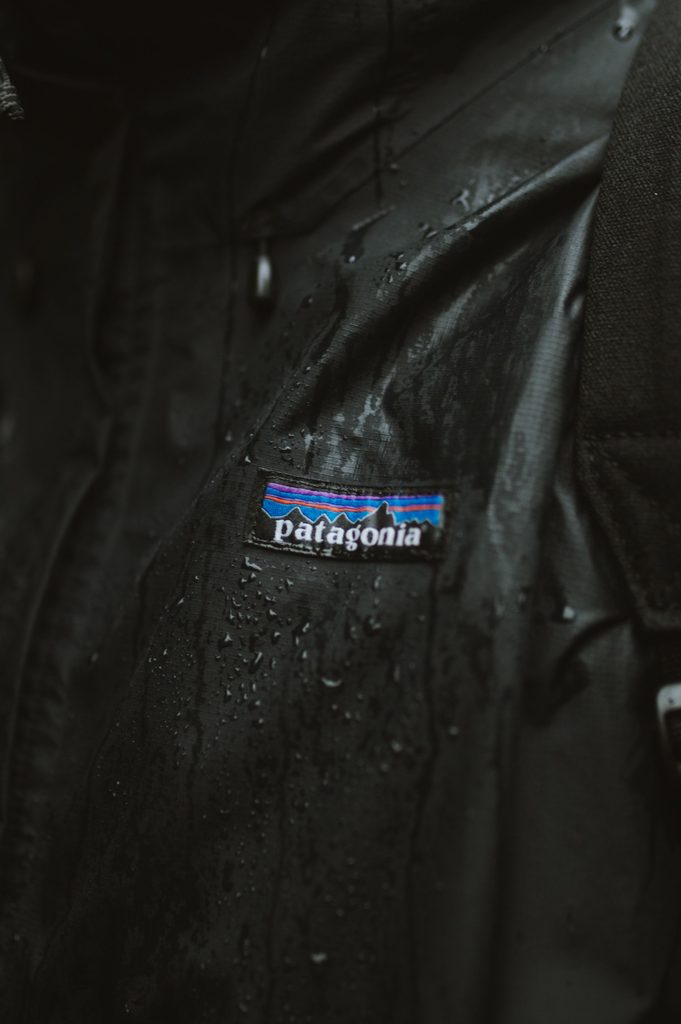
For the past few years I have been using pretty much the same clothes (just with fewer layers) and now, after a few discussions with my family about the state of my equipment, I’ve decided to upgrade to something that was truly mine. Something like a new jacket, bib, gloves, the basics. The reason I’m telling you this is that it proved to be a greater challenge (for me) than I anticipated.
For every piece of equipment, I had to compare different brands, products within those brands, understand and compare specific terminology (words like “GORE-TEX,” “shell,” and “insulation”), identify the “specs” of each piece, contrast their performance (how does one brand’s waterproof rating compare with another’s?), their suitability for my intended use, check availability and color, evaluate the price against cheaper or more expensive alternatives, among other things.
I
ended up burning out in the middle of the process and was wondering all the time: “Am I overpaying for characteristics I don’t need? How do I know which piece aligns more with what I want to do? Surely this more expensive one has better “quality,” right?”
Well, not really. I am lucky to have a couple of friends who deal with winter sports brands on a regular basis, and they explained everything. It turns out that, taking into account how I would use the jacket and how I wanted all the equipment to fit together, a much cheaper jacket (compared to the most expensive of the ones I selected) would do the trick.
When I asked about the more expensive one, the answer was always along the lines of: “I mean, yeah, that will last longer and it’s more durable, but it won’t work the way YOU EXPECT it to”.
That is what triggered my research for this blog. I realized I wasn’t struggling to find good product options and different approaches, I was having trouble determining which GOOD products were RIGHT for ME.
The Psychological Problem
To begin explaining the psychological mechanisms behind this conflict in the buying process, one should start by defining what’s known as the “price-quality heuristic”. This heuristic involves customers using the price of a specific product (or line of products) as an indicator of its quality when evaluating it.
In short, it’s basically a shortcut the brain uses to simplify the process of identifying candidates, evaluating their characteristics, eliminating options, comparing and selecting. In this case, we go from products (let’s say snowboarding jackets), to their price, and the comparison may rely mainly on price as a signal of quality.
Following the example given in the introduction, this may lead someone to buy a more expensive jacket with technology and specifications far beyond what they need, potentially resulting in a worse experience than a cheaper alternative. This can happen in scenarios where the more expensive option specializes in solving a specific problem and the cheaper one is more versatile.
However, this does not mean that the price of a product is necessarily misleading; some expensive products can genuinely offer greater benefits than their cheaper counterparts or excel in certain scenarios. A meta-analysis by Rao & Monroe (1989) showed that price and brand name were positively associated with consumers’ perceived quality. The key word is “perceived”: we are not debating actual quality just yet.
Quality vs. Suitability
One reason this heuristic is relevant to the whole process is the technical complexity and choice overload the customer may experience. This includes the use of unfamiliar terminology and competing specifications that come into play when comparing two different products, especially if they are from different brands. Even though this might not seem like a huge problem, it adds friction to the process and makes an already complicated decision harder.

It is also important to distinguish that having many options is not the same as having difficulty evaluating them. They can be separate issues, depending on the case. According to Chernev, Böckenholt and Goodman (2015), complexity, decision difficulty, uncertainty about preferences and decision goals are factors that influence choice overload. However, this is not enough to fully establish that more options are always harmful.
So, we’ve established that the problem is not only the amount of information presented, the options, or even the price-quality relationship, but rather a combination of them. Why? Because it can leave customers unable to fully connect those products and their characteristics to their needs.
The central distinction in this entire analysis is that high quality does not necessarily imply suitability. For this purpose, I am going to introduce three concepts: product quality, product suitability and perceived value. Product quality refers to how well a product performs its intended function, product suitability relates to how well the product matches a particular customer’s needs, and perceived value describes how worthwhile the customer considers the benefits relative to the costs and drawbacks (including the price).
In the snowboard example, quality could be seen in a premium shell that offers excellent weather protection, a lack of suitability in that shell not meeting the needs of someone expecting standalone warmth, and perceived value in the more expensive features that might offer only a minor benefit to our snowboarder friend.
Hong and Pavlou (2014) distinguish between the concepts of “product-quality uncertainty” and “product-fit uncertainty”. They found that the latter had a stronger effect on product returns than product-quality uncertainty in online marketplaces. This opens the door to questioning which online information presentation systems actually help the customer.
Also, it is worth clarifying that improving customers’ understanding of the product’s quality may still be insufficient if they do not know whether that product suits them.
Help Choosing Better
Then, how can digital marketers help customers choose better? Firstly, it is extremely important to identify customers’ needs before emphasizing (or pushing) products. Knowing things like the customer’s intended use, experience level, budget and preferences, although difficult to identify accurately, can go a long way toward improving the experience. This is not limited to the buying process, but also to how positively the product performs in use.
Furthermore, the way a marketplace organizes product information around situations and intended uses, rather than only technical categories, can create a softer landing for consumers. Needs-identification assistance before showing products or recommendations could also come into play. Helping customers, especially beginners, understand which questions they should ask can be beneficial, provided it does not add unnecessary friction.
Returning to our example, deciding under which conditions the equipment will be used should come before questions like: “What membrane technology should I look for? Is insulation necessary, or is a shell sufficient?”.
However, there is a difference between listing features and explaining their practical benefits. A “20K/20K” rating, for example, refers to waterproofness and breathability, but tells someone very little if they cannot interpret it. In other words, it may become another impressive-sounding fact without necessarily reducing product-fit uncertainty. That’s without mentioning the limitations of that same product.
To further show how deep this issue can go, in addition to the previous complications there are the differences in terminology and labeling between brands. The “20K/20K” we discussed earlier may not translate directly to another brand’s stated performance claims or testing methods. Even if we, as beginners, manage to get a fair understanding of those claims, there is no guarantee that particular use cases will be self explanatory from the label.
One thing to consider is that different buyers should have different paths as shoppers, especially since we have been mainly focusing on the “inexperienced”. An experienced consumer may find the “needs-identification processes” we described to be a source of friction.
| Shopping experience | Inexperienced consumer | Expeienced consumer |
| Product knowledge | Explain technical features and terminology | Understands specifications and what to look for |
| Preferred shopping journey | Optional questionnaires and guided comparisons | Direct product access and fewer steps |
| Main marketing objective | Reduce uncertainty and support informed decisions | Minimize friction and make purchasing faster |
The key takeaway is that guidance should reduce unnecessary effort without adding excessive friction. Häubl and Trifts (2000) investigate interactive decision aids, including recommendation agents and comparison tools. Their findings show that such tools can improve decision quality and efficiency, while reducing the effort needed to evaluate alternatives.
This is also supported by Wan, Kumar and Li (2024), a field experiment that examined how online product recommendations help customers search. Their results show that recommendations helped customers discover products with higher estimated value through lower prices, better preference fit, or both. Access to these higher-value alternatives was also an important mechanism behind increased purchase probabilities.
Nevertheless, neither study proves that all recommendation systems benefit every marketer or customer; careful consideration of context and application remains key.
Purchasing and Product Experience Through Education
A topic that also goes under many marketers’ radar is customer education, a subject that can potentially create value beyond the immediate transaction. Let’s return to the process of buying snowboarding equipment and separate it into outcomes before and after the purchase.
The pre-purchase stage should consider search effort, time, difficulty understanding and comparing alternatives, decision confidence, and the ability to evaluate choices without feeling overwhelmed, among others. The post-purchase stage should take into account how closely the product matches expectations, comfort, usefulness, satisfaction, and, importantly, returns and complaints.
An educated customer can confidently make choices with the big picture in mind, rather than treating each piece as a standalone item. Without that broader perspective, even if each piece of equipment is individually “correct” for its intended use, the overall outfit could still fall short of expectations.
Gallino and Moreno (2018) examined virtual fit information in online apparel retail through field experiments. They found that providing fit information increased conversion rates and order values, while reducing certain fulfillment costs linked to returns. However, we cannot directly conclude from this study that providing fit information improves customer satisfaction in every context.
The Commercial Tension
Finally, there’s an elephant in the room when it comes to helping customers get the best value for money: the commercial tension. As an online retailer, should I focus on improving customer experience or maximizing immediate sales? There are ethical arguments here, but business considerations matter too.
Companies often have immediate sales and profit objectives, and the most expensive product may not always be the best match for an individual customer. It could still be the best match, even with a needs-based recommendation system, but the recommendation should depend on customer needs rather than price alone.
However, guiding customers toward more suitable products might improve satisfaction and reduce return-related costs, potentially offsetting some short-term commercial trade-offs. This also means that conversion rate alone is not a sufficient metric to determine the success of a system like this.
The evidence in the previously mentioned Gallino and Moreno (2018) study shows that fit information can benefit both customers and retailers in specific settings. In spite of this, it is important to state that there is not enough evidence to argue that needs-based marketing is always more profitable. Every situation should be analyzed separately, paying close attention to metrics such as conversions, returns, and repeat purchases together.
Conclusion
So, to round up: Does a higher price always indicate a better product? Not necessarily. It may indicate advantages, but those advantages depend on the product and its intended use. Technology, durability, and brand reputation are all factors that come into play. Customers should not treat price as an absolute measure of quality.
How can online stores help customers choose the right product? Decision aids and needs-based communication are both options worth evaluating, but their usefulness depends on the specific context.
Can improving product information reduce returns? It may help reduce uncertainty, but the effect depends on the marketplace, the information provided, and the customer.
In conclusion, there is a clear distinction between technical quality and suitability which highlights the potential role of digital marketing in connecting products with actual customer needs. This reinforces the importance of adapting guidance to each customer’s knowledge and intended use.
A better fit may not only improve the experience of using the product but also make the purchasing process easier. These decisions may benefit both customers and businesses, depending on the context and how the solution is implemented.
In my case, the purchasing process felt like absolute chaos. But after being guided by someone with experience, who understood what I was looking for and how I planned to use it, I ended up making a better purchase. Not because the jacket was cheaper, it actually cost more than some of the other alternatives, but because it suited ME.
References
- Chernev, A., Böckenholt, U., & Goodman, J. (2015). Choice overload: A conceptual review and meta-analysis. Journal of Consumer Psychology, 25(2), 333–358. https://doi.org/10.1016/j.jcps.2014.08.002
- Gallino, S., & Moreno, A. (2018). The value of fit information in online retail: Evidence from a randomized field experiment. Manufacturing & Service Operations Management, 20(4), 767–787. https://doi.org/10.1287/msom.2017.0686
- Häubl, G., & Trifts, V. (2000). Consumer decision making in online shopping environments: The effects of interactive decision aids. Marketing Science, 19(1), 4–21. https://doi.org/10.1287/mksc.19.1.4.15178
- Hong, Y., & Pavlou, P. A. (2014). Product fit uncertainty in online markets: Nature, effects, and antecedents. Information Systems Research, 25(2), 328–344. https://doi.org/10.1287/isre.2014.0520
- Rao, A. R., & Monroe, K. B. (1989). The effect of price, brand name, and store name on buyers’ perceptions of product quality: An integrative review. Journal of Marketing Research, 26(3), 351–357. https://doi.org/10.1177/002224378902600309
- Wan, X., Kumar, A., & Li, X. (2024). How do product recommendations help consumers search? Evidence from a field experiment. Management Science, 70(9), 5776–5794. https://doi.org/10.1287/mnsc.2023.4951