
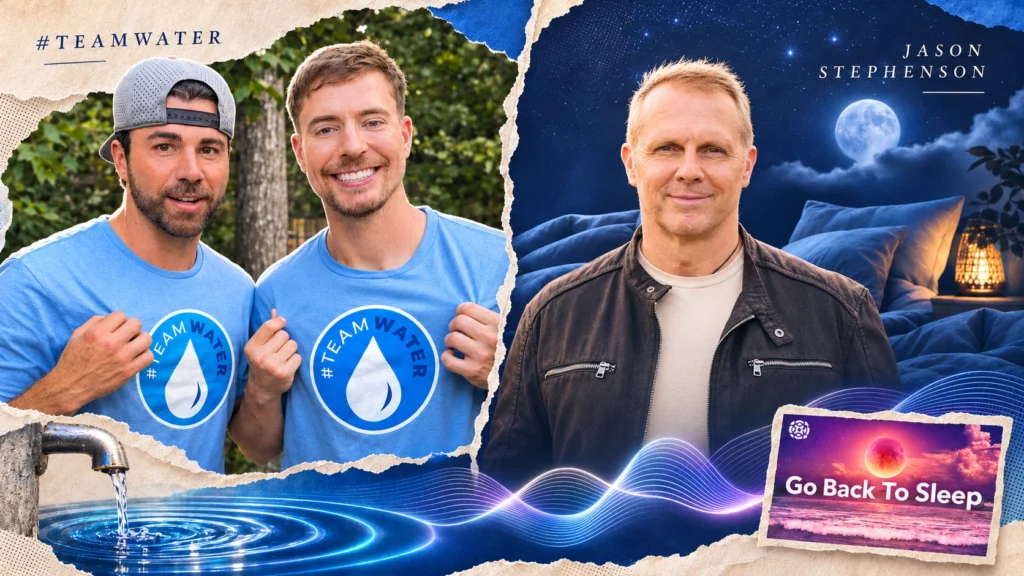
In August 2025, YouTube creators MrBeast and Mark Rober launched #TeamWater. More than 10,000 creators joined the campaign, raising over $40 million in just 31 days to support long-term clean water projects. The campaign not only brought together supporters from different communities, but also gave many viewers who might not have been interested in clean water issues a chance to learn about this global challenge. Beyond fundraising, WaterAid and its partners are also working to build and maintain water infrastructure.
Another YouTube creator, Jason Stephenson, shares positive values through a very different type of content. He has long created guided sleep meditations to help listeners relax and ease their mental burden before bed. As he guides people through breathing and letting go of stress, he also shares ideas of self-care and self-acceptance: allowing yourself to rest, not blaming yourself for feeling tired, and learning to treat yourself more gently. In this way, an audio recording that someone originally plays to fall asleep may also become an opportunity to rethink how they treat themselves.
These creators use different approaches to share the values they believe in. If you also want your content not only to reach more people but also to spread the positive ideas you believe in and encourage meaningful change, how can you expand your positive impact so that more people truly benefit?
1. What Does It Really Mean for Content to Make an Impact?
Imagine three situations.
A young person watches a creator talk about different careers and ways of living. They do not quit their job or take any immediate action, but for the first time, they realize that there are other ways to live.
Another person feels inspired by a video and decides to try a hobby they have never explored before. They give it up after a week, but have taken a step they previously did not dare to take. Through that experience, they also learn more about what they enjoy.
A third person has never followed a certain creator. Yet after coming across one of their videos by chance, they start to rethink their career direction and eventually make a real change.
Which of these three people was genuinely influenced?
Perhaps the answer is: all three.
Meaningful impact does not always mean changing someone’s behavior immediately, nor does it have to turn into a lasting habit. It can begin with a new thought or a possibility someone had never considered. It can also take the form of one brave attempt, or a decision that eventually changes someone’s life.
For one person, simply knowing that another way of life is possible may already be valuable. Even if they never choose that path, a new possibility has entered their view.
Why Views and Likes Cannot Tell the Whole Story
This also explains why we should not measure the impact of content only by follower counts, likes, or watch time. Someone may never follow a creator but still change how they understand an issue because of that creator’s content. The influence may even happen long after they watch the video, rather than at the moment they click on it.
What matters more is whether the content helps people develop a new understanding, see more choices, or make decisions that benefit themselves and others with greater independence.
For #TeamWater, that impact might begin with a new understanding of clean water issues and may later lead to a donation or practical support. For Jason Stephenson, it might be the first time a listener seriously asks: do rest and self-acceptance also deserve a place among my own life principles?
When creators want to expand their impact, a useful first question is what new possibilities they hope to help others see.
2. How Can Positive Values Become Part of the Content Itself?
Having ideas worth sharing is only the beginning. Viewers also need to understand, through the content itself, why those ideas matter to them.
In Jason Stephenson’s meditation videos, Guided Sleep Meditation, Self Acceptance, Self Love, & Self Respect directly focuses on self-acceptance, self-love, and self-respect. Sleep Talk Down, It Can Wait, It’s Time For Sleep, meanwhile, uses slow breathing and relaxation guidance to invite listeners to put aside the day’s burdens for a while and allow themselves to rest. Whether these values are the main theme or are woven into the experience of falling asleep, they are not an extra lesson added after the meditation. They are something listeners can encounter while experiencing the content.
Someone may have only been looking for an audio recording to help them sleep. Yet by repeatedly hearing messages about allowing themselves to rest and letting go of pressure, they may gradually encounter an attitude toward life that differs from their usual one.
This suggests a useful principle: if you want your content to influence how people think, make the idea part of the experience itself, rather than leaving it as a slogan at the end.
This principle is not limited to personal growth content.
For example, imagine a creator who supports LGBTQ+ people and wants to help viewers who know little about this community become less prejudiced.
The creator could speak directly about the importance of equality and respect. They could also share their everyday life, relationships, concerns, and experiences, giving viewers a chance to encounter a perspective that was previously unfamiliar to them.
Even if a viewer does not immediately change their position, they may begin to realize that their previous understanding of this community was incomplete.
What Research Suggests and What Creators Can Do
In a study of 245 university students, Schiappa et al. (2006) examined viewers’ familiarity with gay characters in Will & Grace. They found that this familiarity was associated with lower levels of prejudice toward gay people. This association was particularly noticeable among participants who had less contact with gay people in real life. Read the original study.
What makes this example interesting is the role of familiarity. Through the characters’ relationships and everyday experiences, viewers get a chance to see their lives from a more personal perspective.
This shows us one important way creators can communicate values: by giving people a chance to understand individuals, experiences, and ways of living they may not have known before.
Creators can start with a few practical questions:
- What do you hope viewers will reconsider? Is it how they judge themselves, how they see a certain group, or an assumption they have about a way of life?
- What kind of content could make that new perspective concrete? A personal experience, an everyday scene, a clear explanation, or an opportunity to try something for themselves?
- Can viewers form their own judgments? Does your content offer enough information, experiences, or different perspectives for them to think independently?
Once that kind of content is ready, the next question is: how can more people have the chance to come across it?
3. How Can You Help This Content Reach More People?
Good content does not automatically reach a wider audience.
On digital platforms, creators usually need to consider three questions: how can people discover the content, why would they want to share it, and how can it move beyond an existing audience?
Help People Discover Your Content, Even If They Do Not Know You
Imagine someone opening YouTube late at night and searching for ‘self-acceptance meditation’ or ‘self-love exercises before sleep.’ Jason Stephenson’s guided meditation about self-acceptance, self-love, and self-respect could appear in those search results. This is what content discoverability means: helping people with a relevant need find your content, even if they have never heard of you.
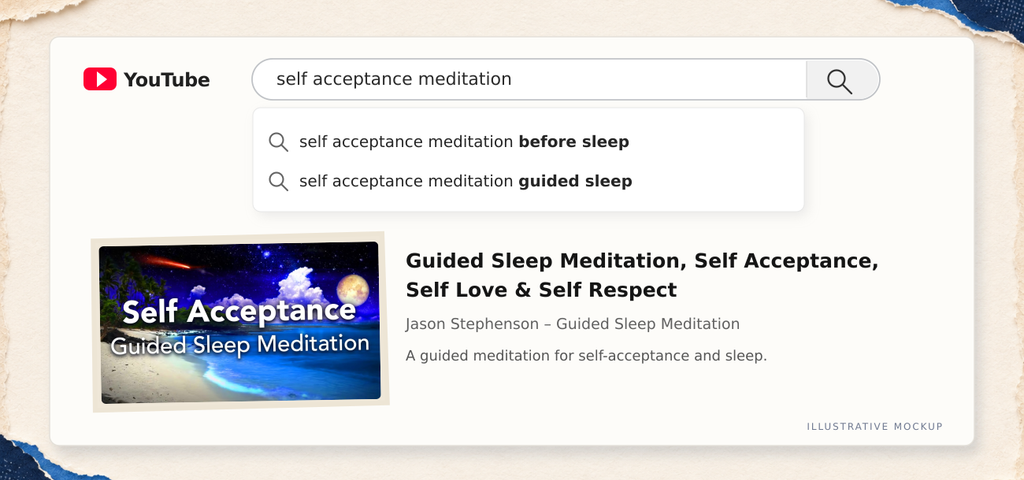
On content platforms such as YouTube and TikTok, search results generally take into account how closely content matches what users are looking for, along with signals related to viewing and interaction. More specifically, YouTube considers how titles, descriptions, and video content match a search query, while TikTok also uses information such as hashtags, sounds, and user behavior. For creators, this makes clear and accurate titles and descriptions, thumbnails that communicate the topic, and content formats that genuinely meet viewers’ needs worth designing carefully.
But reaching more people can go a step further: helping those who would not actively search for a certain idea encounter it as well. For example, a creator who wants to share ideas about self-care could develop different series within the same channel. One might discuss self-acceptance directly; another could start with everyday struggles such as workplace exhaustion or life stress; and a third could offer practical sleep exercises. Short videos, personal stories, and other formats can also bring the same idea naturally into topics that different viewers already find interesting.
People who actively look for self-care content can then find it more easily, while someone who simply wants help with insomnia, stress, or problems at work might also encounter a new perspective on life. The key to expanding reach is to create more ways for different people to discover an idea worth sharing.
Give People a Reason to Share Your Content
Beyond search and platform recommendations, people sharing content with one another can introduce it to new social circles. So what makes someone want to share a piece of content?
A study by Berger and Milkman (2012) found that content that evokes high-arousal emotions, such as awe, excitement, anger, or anxiety, tends to spread more widely. Practical value, interestingness, and the element of surprise were also associated with sharing. These findings suggest three directions creators can explore:
First, evoke genuine emotions.
Real stories and strong emotional connections can help viewers feel why a piece of content matters. For example, in the TeamWater launch video, MrBeast showed the muddy water that people in a Malawian village had previously depended on, followed by the moment they could drink clean water after a new pump was installed. Seeing that real change makes an abstract water crisis easier to understand and gives viewers a reason to share the hope and emotion of the moment.
Second, offer practical value.
When content helps solve a real problem, people may want to pass it along to someone who could use it. For example, a creator could turn self-care advice into an easy-to-save checklist or provide a guided bedtime relaxation exercise that listeners can follow right away. That makes the content useful not only to watch, but also to save and share.
Finally, make your content interesting and spark curiosity.
During #TeamWater, science creator Mark Rober published a video titled Can You Safely Drink Your Own Pee?. The shocking title alone can make people curious enough to click, and it could even become a joke that friends send to one another. In the video, Rober invited MrBeast to join a water purification experiment. He used humor and a clear demonstration to explain the technology. Then he connected it to the global clean water issue. It is a good example of how even a serious topic can become engaging and worth sharing through an unexpected approach.
Still, the way content spreads should serve its original purpose. Even if anger or anxiety may encourage sharing, creators should avoid deliberately creating fear or exaggerating problems just to gain traffic. The goal is to make people want to share because the content offers a genuine emotional connection, practical help, or an interesting discovery.
Work With Other Creators to Bring Your Values Into New Communities
Collaborations can help the same issue reach different interest communities through different forms of content. #TeamWater offers a good example: beyond Mark Rober’s science experiment mentioned earlier, food creator Bayashi published Fried Water, using an unusual cooking idea to draw attention to the campaign. Gardening creator Mark Marshall began with the importance of water in gardening and used an at-home experiment to explain water extraction technology used in clean water projects. Streamers xQc and Adin Ross also joined MrBeast for a fundraising livestream challenge. They agreed to keep streaming until they reached their fundraising goal. Viewers could participate in real time.
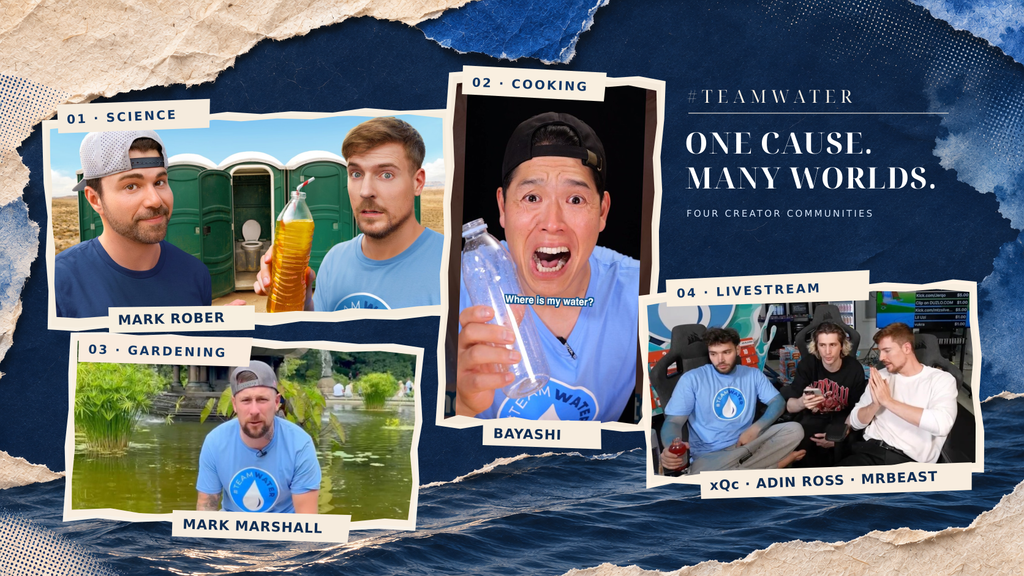
Rather than simply repeating the same charity message, these creators brought the clean water issue into the kinds of content they already knew how to make. Audiences interested in cooking, gardening, science, or livestream entertainment could therefore encounter the cause through something they already enjoyed. For creators, the value of collaboration is not just a larger combined audience, but finding shared values that connect different communities and help meaningful content move beyond its original circle.
For creators who want to expand their reach, it is worth considering these three ways people might find their content:
| Channel | What to do | Main opportunity |
|---|---|---|
| Search and recommendations | Use clear titles, relevant topics, understandable thumbnails, and accessible content | Help new viewers discover it |
| Social sharing | Create ideas, stories, or stand-alone clips that are worth passing along | Reach new social circles through viewers |
| Creator collaborations | Collaborate with creators who share your values but reach different interest communities. | Move beyond your existing audience communities |
These approaches can work together.
There is no single right combination for every topic. The question is how to keep the content’s original value while giving more people opportunities to discover it, understand it, and share it.
4. How Can Wider Reach Lead to a Wider Positive Impact?
When content starts receiving more views, we reach the big question: does being seen by more people also mean that more people are benefiting from it?
Think back to the three situations in the first section. One person discovered a possibility they had never considered, another took a first step toward trying something new, and a third made a real change much later. These kinds of influence cannot always be observed through views, likes, or subscriptions.
Creators therefore need to look for feedback that reflects the value they hope to offer and use it to improve what they create next.
Ask Questions That Reveal What Your Content Actually Changed
- If you want to share a different way of thinking about life, go beyond asking, “Did you like this video?” Instead, ask: “Did this content make you rethink anything? Did it help you see a choice you had never considered?”
- To encourage people to explore a new interest, ask: “Did this inspire you to try something new? What difficulties did you run into along the way?”
- When your goal is to deepen people’s understanding of a social issue, ask: “What information changed or expanded your understanding of this issue? What would you like to learn more about?”
These questions help creators see whether their content has sparked new thoughts, reflections, or actions. They also reveal which parts truly resonate with viewers.
Besides asking questions directly, creators can regularly review comments, direct messages, and experiences that viewers choose to share, looking for patterns that appear again and again. For example, some viewers might say, “I didn’t know this was another possible way to live.” In response, a creator could share more real-life examples. Others may agree with an idea but struggle to put it into practice. Clearer demonstrations or a beginner’s guide could help. If people repeatedly ask about the same social issue, the next piece of content could address those questions.
In this way, audience feedback becomes more than a measure of interaction. It can help creators recognize real needs, improve their content, and continue expanding its positive impact.
Turn One Encounter With Content Into More Opportunities People Can Use
Helping someone see a new possibility is already a meaningful form of influence. Giving people who want to explore further useful resources can help that influence go further. Depending on the type of content, creators can start in three ways.
First, offer a clear next step. Add trustworthy sources, beginner exercises, frequently asked questions, or a practical way to participate to your videos or articles. Viewers do not have to act immediately, but if they become interested, they will know where to begin.
Second, organize separate pieces of content into resources people can return to: topic-based playlists, step-by-step tutorials, downloadable checklists, or a library of audio exercises. If there is a real need, creators could even develop interactive tools or an app. For a creator like Jason Stephenson, well-organized categories and sleep meditations that remain available can help listeners with different needs find an exercise that suits them.
Third, when the goal requires professional expertise or practical implementation, work with suitable partners. #TeamWater did not rely only on creators spreading the message and raising donations. WaterAid and local partners are also responsible for building and maintaining water infrastructure. The progress they have reported includes piped water systems and rainwater collection solutions. Providing long-term access to clean water for around two million people remains a goal that will take several years of work. See the project updates.
None of these approaches is about pushing viewers to act exactly as a creator wants. Instead, they provide more paths that people can choose for themselves if they want to learn or try something further.
Look Beyond Distribution Numbers to Real Changes in People’s Lives
Looking at distribution data alongside audience feedback makes it easier to decide what to improve next. If new viewers have trouble finding your content, try different titles, formats, or channels. When people watch but miss the main idea, improve the explanation or examples. For those who are interested but unable to act, make resources and participation steps easier to use.
Creators cannot know every person their work will eventually influence. But they can use the feedback available to them to create more chances for their content to be discovered, understood, and put to use.
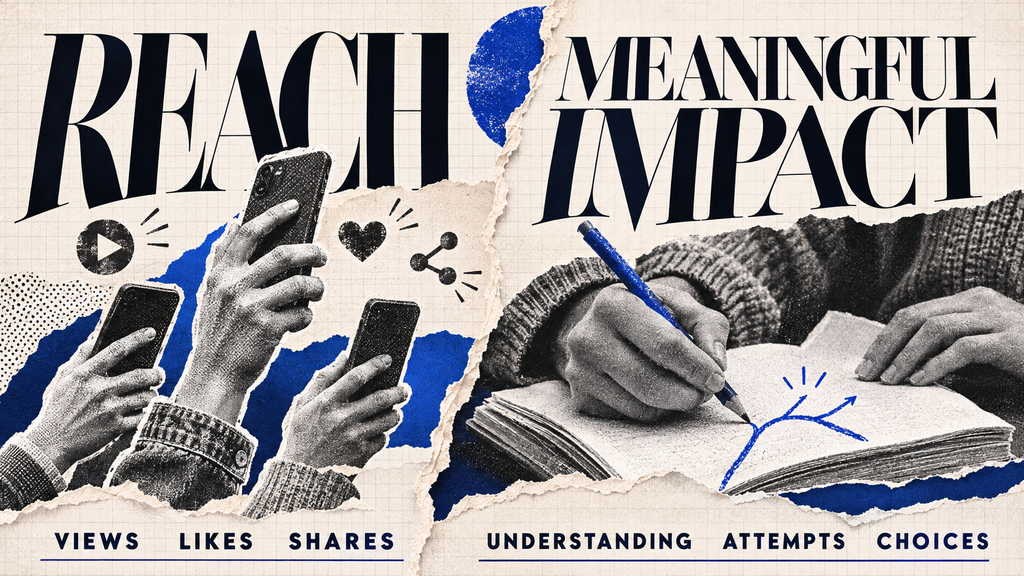
What is truly worth expanding is not just the number of views, but the creative practices that help more people understand something, see new possibilities, explore freely, or receive practical help.
Conclusion: Helping More People See More Possibilities
#TeamWater introduced a clean water issue to audiences around the world and used collective participation to support real projects. Jason Stephenson, meanwhile, brings self-acceptance and self-care into content that he publishes regularly, giving listeners the chance to encounter these ideas in their everyday lives.
Their content takes different forms, but together they show what is possible: content can do more than compete for attention. It can influence how people understand the world, treat themselves, and make choices.
For creators who hope to make a positive impact, a useful place to start is one simple question:
What new possibility do I hope my content will help someone else see?
Think about that question first. Then consider how to turn it into content, how to help more people discover it, and how to keep improving through feedback.
When growing reach is connected to real value, more views have a chance to become more understanding, more choices, and more meaningful change.
Frequently Asked Questions
Can Only Educational or Charity Creators Make a Meaningful Impact?
No. Entertainment, gaming, lifestyle, and sleep-related content can also share new ideas and perspectives on life. What matters is whether the content gives viewers something worth thinking about, experiencing, or trying—not which category the creator belongs to.
Do You Need a Large Following to Help More People?
Not necessarily. Follower counts reflect the size of an account, but they do not fully measure the impact of its content. Through search, sharing, or recommendations, a video can influence people who have never followed its creator. Collaborations can also help an idea reach new communities.
How Can You Tell Whether Your Content Is Creating a Positive Impact?
Beyond views and engagement, you can look for signs that viewers have developed new understandings, raised new questions, tried new actions, or shared how the content influenced their choices. Choose feedback that matches your purpose, and use it to adjust both your content and the way you share it.
References
Bayashi TV. (2025, August 23). Fried water 💧 #teamwater [Video]. YouTube. https://www.youtube.com/watch?v=sbq55FHiGsw
Berger, J., & Milkman, K. L. (2012). What makes online content viral? Journal of Marketing Research, 49(2), 192–205. https://doi.org/10.1509/jmr.10.0353
Jason Stephenson. (2021, March 7). Guided sleep meditation, self acceptance, self love, & self respect (spoken meditation) [Video]. YouTube. https://www.youtube.com/watch?v=F_W2fsN_yYo
Jason Stephenson. (n.d.). Sleep talk down, it can wait, it’s time for sleep [Audio meditation]. Insight Timer. https://insighttimer.com/jasonstephenson/guided-meditations/sleep-talk-down-it-can-wait-it-s-time-for-sleep
Knapp, J. D. (2025, August 15). MrBeast, Adin Ross and xQc raise $12 million in 18-hour TeamWater charity livestream. TheWrap. https://www.thewrap.com/mrbeast-adin-ross-kick-livestream-12-million-charity-xqc/
Mark Rober. (2025, August 1). Can you safely drink your own pee? [Video]. YouTube. https://www.youtube.com/watch?v=KRhofr57Na8
MrBeast. (2025, August 1). 2,000,000 people get clean water for the first time! [Video]. YouTube. https://www.youtube.com/watch?v=Z4hVGCWH1Kc
Schiappa, E., Gregg, P. B., & Hewes, D. E. (2006). Can one TV show make a difference? Will & Grace and the parasocial contact hypothesis. Journal of Homosexuality, 51(4), 15–37. https://doi.org/10.1300/J082v51n04_02
TikTok. (n.d.). How TikTok recommends content. TikTok Support. https://support.tiktok.com/en/using-tiktok/exploring-videos/how-tiktok-recommends-content
WaterAid. (n.d.). #TeamWater. https://www.wateraid.org/global/teamwater
WaterAid. (2025, August 28). Macclesfield landscaper goes global with #TeamWater campaign led by MrBeast and Mark Rober with WaterAid. https://www.wateraid.org/uk/macclesfield-landscaper-goes-global-teamwater-campaign-led-mrbeast-and-mark-rober-wateraid
YouTube Help. (n.d.). How YouTube search works. https://support.google.com/youtube/answer/16090438?hl=en
YouTube Team. (2025, September 5). Mark Rober and MrBeast are rallying YouTube creators for #TeamWater. YouTube Blog. https://blog.youtube/news-and-events/mrbeast-and-mark-rober-announce-team-water/