

Have You Ever Spen an Extra $20 Just to Avoid Paying $5 for Shipping?
Have you ever gone online to buy one little thing and ended up with a shopping cart full of stuff you didn’t actually intend to buy? I’ve done that more than once. I remember going on Shein just looking for some hair ties and a comb. That was it really, just two things I needed. But as I was browsing, I kept coming across other things and started to add those in too. I ended up with a few more items in the cart and somehow I’d ended up buying a bikini. By the time I’d finished my order, it was absolutely nothing like what I’d set out to buy.
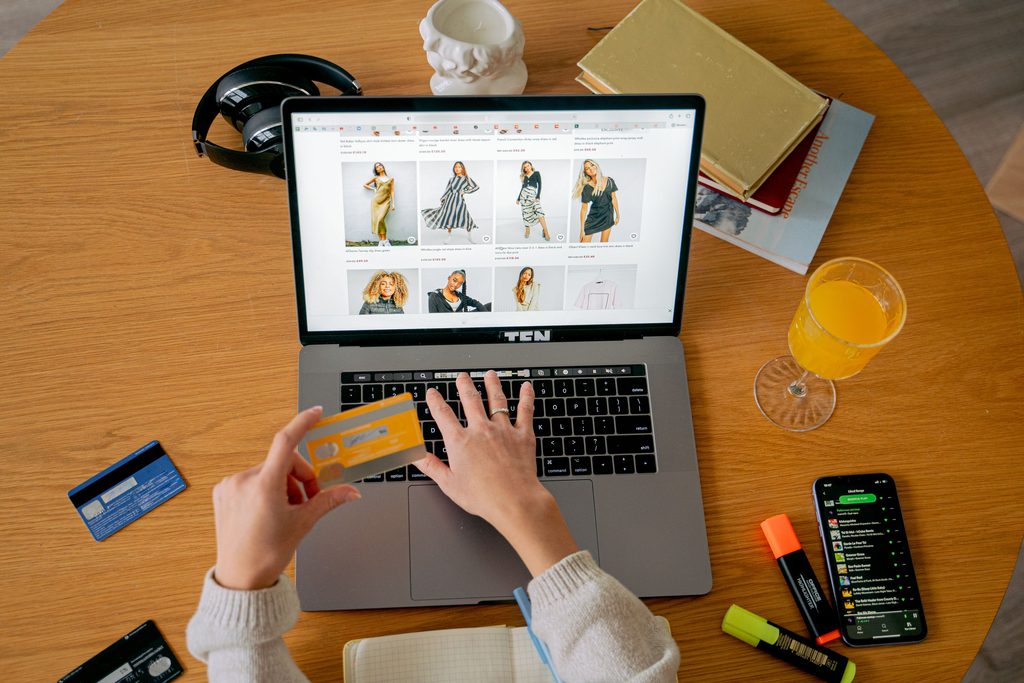
Figure 1: Consumer buying online
Therefore, this made me think about how easily you can lose sight of what you actually wanted when you’re shopping online. The same applies to promotions, particularly free shipping. You’re buying a T-shirt for $35 and it turns out the shipping is $5. It’s free if you spend $60 though. Rather than pay the $5 for delivery, you just buy another item for $25. You feel like you’ve saved money, but you haven’t actually. You’ve spent $20 more than you would have.
As an evidence, Becerril-Arreola, Leng and Parlar (2013) looked at the impact of free shipping on purchase behaviour. They used retailer data and a simulation model to look at the effect of delivery conditions on spending. In the data they had, the average order value was $58.61 without free shipping and $63.13 with free shipping (i.e. where orders of $75 or more were eligible for free delivery).
Buying Decisions Are Influenced
We all think we’re sensible when we’re out spending. We buy things because we need them or because we’ve found a good price. But there are times when you see something on Instagram and you just want it, even if you weren’t in any way looking for it.
This is connected to impulse buying, where you just feel the need to buy something at that very moment without having planned to. Online shopping makes this so much easier as you don’t have to go into a shop and payment is just a few clicks.
Another key factor is cognitive fluency, which refers to how easily we process information. As discussed by Peep Laja in CXL, the more easily we can understand information, the simpler a purchase decision may feel. A website that is easy to navigate will allow a customer to find what they’re looking for and complete the purchase with minimal effort.
Lastly, emotions can also play a part in our decisions. Díez Marcet et al. (2016) looked at the way shopping can at times provide a temporary emotional release for people who are suffering from compulsive buying. That’s of course quite different from simply buying things on a whim, but it does serve to remind us that shopping isn’t always about the utility of the product.
Why Does Free Shipping Feel Like Such a Good Deal?
One of the psychological principles that may be at work here is loss aversion. The notion is that losing something often feels worse than gaining the same amount feels good. Paying $5 for delivery may seem like you’ve lost money, whereas you’d be quite happy to spend more on another product as you’re getting something in return.
There’s also the framing effect, which is all about how the way information is presented affects our decisions. A site which says “Shipping costs $5” is going to have a very different impact from one which says “You’re only $20 away from FREE shipping!” They’re both describing the exact same situation. It’s just that the second one makes it feel like you’re spending more in order to get a reward.
These strategies also affect two important digital marketing indicators:
- Average Order Value (AOV): the average amount that a customer spends per order.
- Conversion Rate (CVR): the percentage of website visitors who make a purchase.
Becerril-Arreola et al. (2013) found that free shipping thresholds could be used to increase the average order value, whereas free shipping without a minimum could be used to get more visitors to complete a purchase.
On the one hand, for companies, the issue is working out the right balance. Raising AOV doesn’t necessarily lead to higher profits, as you also have to take into account the cost of delivery and the product margin.
On the other hand, for the consumer, the lesson is much simpler: a promotion that sounds good doesn’t necessarily mean you’re actually saving money.
Wanting Something Even Though We Don’t Need It
Something very similar happened to me with a skincare product which I was constantly seeing on Instagram. I wasn’t really all that interested initially, but it suddenly seemed like every influencer was recommending it. After seeing it so many times, I started to wonder if it was actually any good at all. In the end, I found myself wanting to try something I hadn’t even been looking for.

Figure 2: Person promoting skincare products through social media.
This can be linked to Fear of Missing Out (FOMO), i.e. the feeling that other people are having some experience that we’re not. Roberts and David (2019) found a link between higher levels of FOMO and greater levels of social media use among university students. Again, their study didn’t look at purchasing behaviour specifically, but it does go some way to explaining the importance of the social connection that we derive from being online.
Another possible explanation is the frequency illusion, discussed by Maryville University (2020). Once you start paying attention to something you’re interested in, you start to see it everywhere. It may well have been that the skincare product was actually appearing more frequently, or it may simply have been that I was now noticing it more.
Moreover, social media also has a broad impact on shopping. According to Sprout Social’s 2025 research, 76% of the social media users surveyed said that content they had seen on social media had influenced a purchase in the previous six months.
Why Do Ads Sometimes Follow Us Everywhere?
When searching for a product online, it is common to notice an increase in related advertisements across social media platforms, such as Instagram, later that same day. At first, these advertisements may seem useful and relevant, especially when there is an interest in the product. However, as they continue to appear repeatedly, they can eventually become annoying and overwhelming.
This can be explained by behavioural targeting, whereby brands can show ads to people based on their previous online activity. If you’re advertising to people who have already visited your site, then that’s pretty much the definition of retargeting.
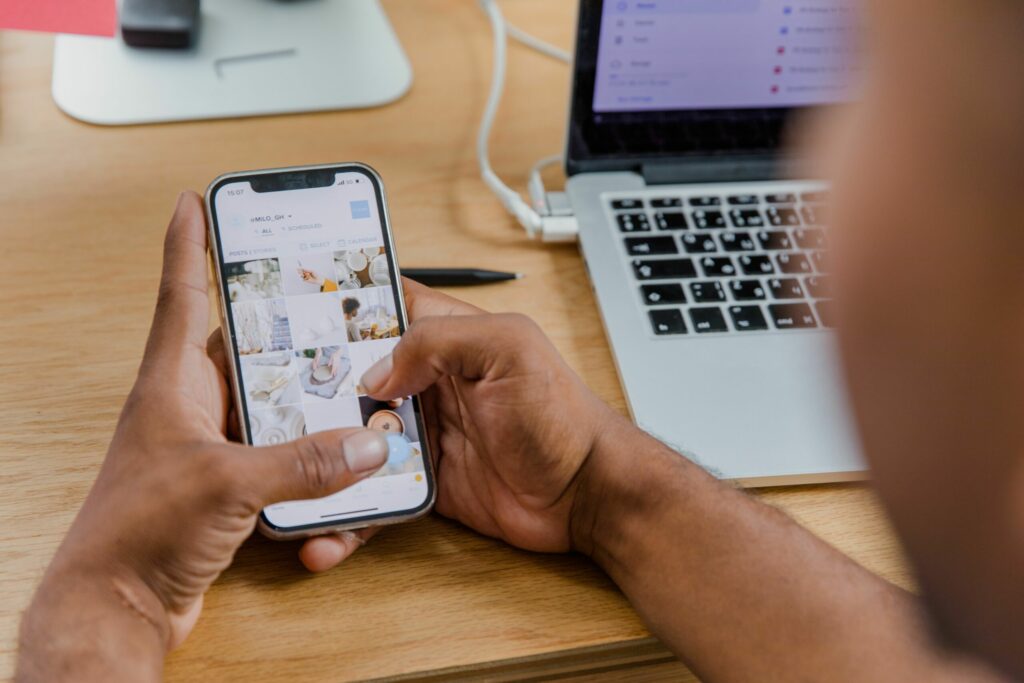
Figure 3: Person browsing product advertisements on a smartphone.
These techniques can make advertisements more relevant, but repetition can also create ad fatigue. This happens when consumers lose interest or become irritated after seeing the same advertisements too frequently. Brands can try to manage this through frequency capping, limiting how often users see an advertisement.
This is connected to digital atmospherics, which is the idea that the design of the online environment can influence the consumer’s experience. Good photos, easy navigation and personalized recommendations may all encourage visitors to go and look at more products.
From Discovering a Product to Actually Buying It
Imagine coming across a beauty product on TikTok, reading the reviews, going to the brand’s website and then getting an ad for it. You could even get an abandoned-cart email if you’d added it to your cart and then not completed the purchase.
These emails are examples of marketing automation, whereby a customer action triggers a predefined message.
All these interactions can be connected to the customer journey:
How Digital Marketing Influences the Customer Journey
| Stage | Marketing strategy | Purpose |
| Awareness | TikTok and influencers | Introduce products |
| Consideration | Reviews and recommendations | Help compare alternatives |
| Conversion | Free shipping and cart reminders | Encourage purchases |
| Post-purchase | Emails and loyalty programs | Maintain customer relationships |
What’s interesting is that marketing doesn’t always have a direct effect on the actual purchase. It can quite often be the thing that makes us come across a product, makes us curious and leads us to consider buying it at some point in the future.
Good Marketing or Manipulation?
Marketing can help the consumer discover a useful product, compare alternatives and find genuine discounts. Some websites, however, will use countdown timers, misleading promotions or messages such as “Only 2 left” to create a sense of urgency.
This can be connected to scarcity, a concept discussed by Maryville University (2020). A product can appear more desirable if it’s scarce. There is a difference between telling a customer the actual level of availability and creating a false impression of urgency.
This is also related to Customer Lifetime Value (CLV), which is the value a customer is expected to generate over the duration of their relationship with a company. You can certainly get a spike in sales by pressuring someone into making one purchase, but that doesn’t necessarily get them back.
Getting someone to buy once is important. Getting them to come back is just as valuable.
Frequently Asked Questions
- Why Do We Buy Things We Don’t Need Online?
Emotions, adverts, social influence and the sheer convenience of online shopping can all be factors that lead to impulse buying.
- Why Do Customers Spend More to Get Free Shipping?
Free-shipping offers can make the delivery charge feel like an unnecessary loss, hence the incentive to add more products to your cart.
- How Does Influencer Marketing Impact Purchasing Decisions?
Influencers can introduce consumers to products through recommendations, trends and repeated exposure.
- Why Do I Keep Seeing Adverts for Products I’ve Searched For?
This is often the result of behavioural targeting or retargeting, which uses previous online activity to show relevant ads.
- How Can We Avoid Making Unnecessary Online Purchases?
Taking time to consider a purchase, looking at the total cost and asking yourself whether you actually need the thing in the first place can all help you make more considered decisions.
Conclusion
So, why do we end up buying things we don’t actually need?
As we’ve seen, there isn’t just one explanation. Our purchasing decisions are influenced by a combination of psychological factors and digital marketing strategies. From loss aversion and the framing effect to personalized advertising, social media and website design, even small details can change the way we perceive products and make decisions.
What’s interesting is that these strategies don’t necessarily force us to buy anything. Instead, they influence how we think about a purchase. Free shipping can make spending more feel like saving money, social media can create needs we didn’t have before, and personalized ads can make certain products seem more relevant or attractive.
Of course, digital marketing isn’t necessarily a bad thing. It helps consumers discover useful products, compare alternatives and find offers that genuinely benefit them. The problem comes when we stop questioning whether we actually need what we’re buying.
In the end, understanding how digital marketing influences our buying decisions doesn’t mean we will stop making impulsive purchases. But it can help us become more aware of the factors behind them.
So, the next time something catches your attention online, ask yourself: Do I really want this, or have I been convinced that I do?
References
Becerril-Arreola, R., Leng, M., & Parlar, M. (2013). Online retailers’ promotional pricing, free-shipping threshold, and inventory decisions: A simulation-based analysis. European Journal of Operational Research, 230(2), 272–283. https://doi.org/10.1016/j.ejor.2013.04.006
BrightLocal. (2026). Local Consumer Review Survey 2026. https://www.brightlocal.com/research/local-consumer-review-survey/
Díez Marcet, D., Valdepérez Toledo, A., Aragay Vicente, N., & Soms Casals, M. (2016). El trastorno de compra compulsiva. Cuadernos de Medicina Psicosomática y Psiquiatría de Enlace, 117, 11–16.
Laja, P. (2026). How to influence purchase decisions: 9 factors affecting the consumer decision process. CXL. https://cxl.com/blog/9-things-to-know-about-influencing-purchasing-decisions/
Maryville University. (2020). Inside the consumer’s mind: 10 marketing psychology principles for growing a business. https://online.maryville.edu/blog/marketing-psychology-principle/
Membreño, I., Rodríguez, B., González, L., Dalila, E., & Cattafi, R. (2019). Neurociencia y mercadeo: Influencia del color en la predisposición de compra en usuarios de redes sociales. Investigación y Pensamiento Crítico, 7(1), 40–51.
Roberts, J. A., & David, M. E. (2019). The social media party: Fear of missing out (FoMO), social media intensity, connection, and well-being. International Journal of Human–Computer Interaction. https://doi.org/10.1080/10447318.2019.1646517
Sprout Social. (2025). New research from Sprout Social finds social media is the top place Gen Z turns to for search, surpassing traditional search engines. https://sproutsocial.com/insights/press/new-research-from-sprout-social-finds-social-media-is-the-top-place-gen-z-turns-to-for-search-surpassing-traditional-search-engines/